FV&N PLAYER REFERENCE · 1958 STANDARD
Trackside Sign Guide
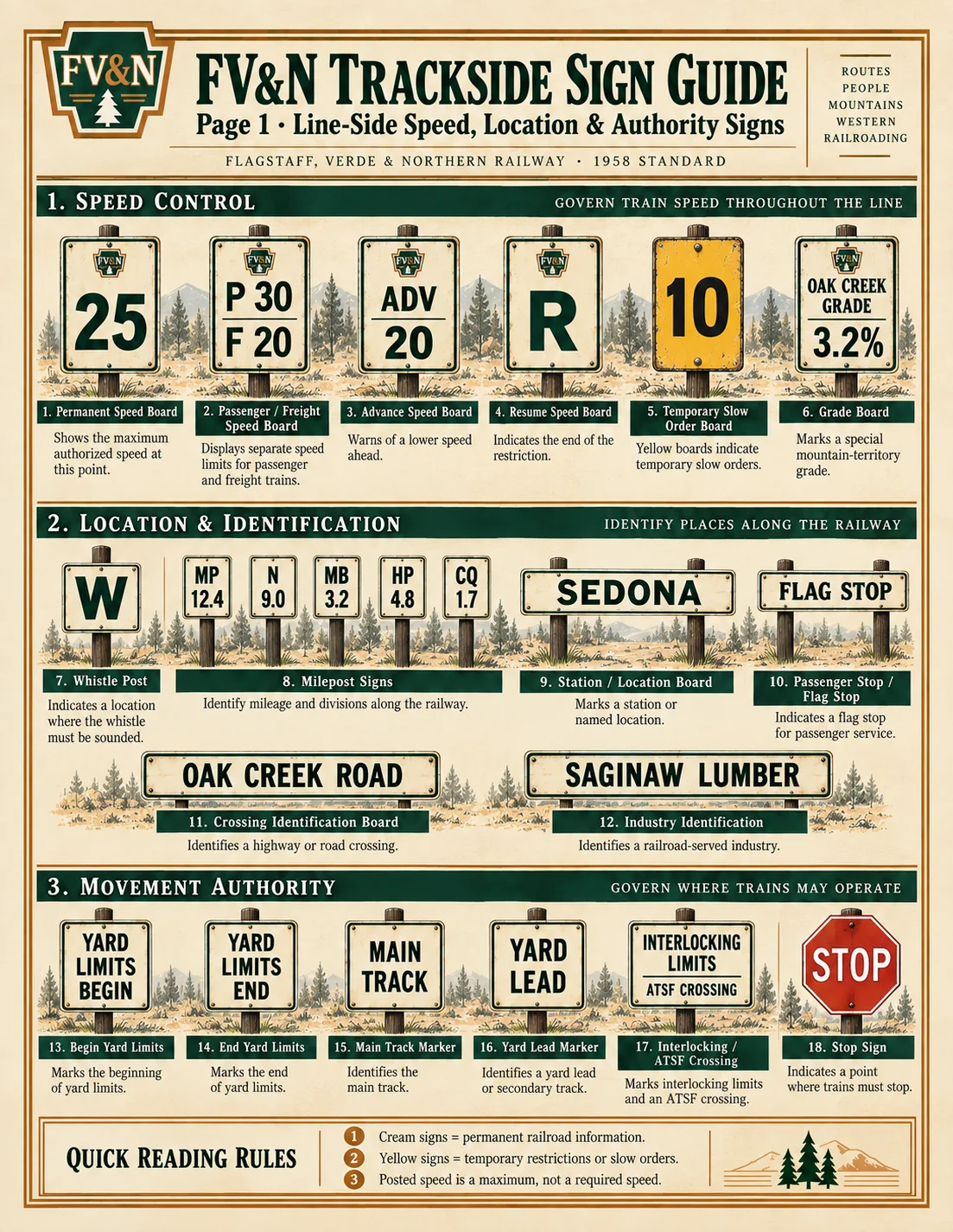
Read the line at a glance. These 18 signs identify speed restrictions, locations, and operating boundaries throughout the railroad.
Numbers and location names below reproduce the illustrated examples. Use the actual trackside board, timetable, bulletin, and dispatcher instruction for your movement. Observe the most restrictive applicable speed.
FV&N TRACKSIDE STANDARD
Speed control
Read restrictions early. Posted speeds are maximums, not targets.
SIGN 01
Permanent speed board
Board reads: 25
Observe the maximum speed posted at that point. This example is 25 mph; the actual board and applicable timetable govern.
SIGN 02
Passenger / freight board
Board reads: P 30 / F 20
Use the line for your service: P for passenger, F for freight. This example permits 30 mph for passenger trains and 20 mph for freight trains.
SIGN 03
Advance speed board
Board reads: ADV / 20
A lower speed is ahead. Reduce speed in time to reach the next speed board at or below its limit. A and ADV both identify advance boards in these references.
SIGN 04
Resume speed board
Board reads: R
Resume normal timetable speed only after the rear of the train clears the restricted track. Any other applicable restriction remains in force.
SIGN 05
Temporary slow-order board
Board reads: 10 · yellow board
Yellow identifies a temporary restriction. Observe the posted maximum throughout the restricted section and follow the bulletin or dispatcher instructions for its limits.
SIGN 06
Grade board
Board reads: OAK CREEK / GRADE / 3.2%
Identifies the beginning of Oak Creek Grade and its ruling grade. The percentage describes the slope, not a speed limit. Follow district speed and train-handling instructions.
FV&N TRACKSIDE STANDARD
Location & identification
Use these boards to identify your position and make clear radio reports.
SIGN 07
Whistle post
Board reads: W
Identifies a location where the whistle must be sounded. Follow the applicable crossing and whistle instructions.
SIGN 08
Milepost signs
Board reads: MP / 12.4
Identify mileage and divisions along the railway. Other illustrated prefixes are N, MB, HP, and CO; use the timetable to interpret the prefix and report the complete marker.
SIGN 09
Station / location board
Board reads: SEDONA
Identifies a station or named location. Use the posted name in position reports; the board itself does not grant authority or require a stop.
SIGN 10
Passenger / flag stop
Board reads: FLAG STOP
Identifies a flag stop for passenger service. Follow the passenger timetable and stop instructions for your train.
SIGN 11
Crossing identification board
Board reads: OAK CREEK ROAD
Identifies a highway or road crossing. Use the name when reporting a crossing condition or requesting protection.
SIGN 12
Industry identification board
Board reads: SAGINAW LUMBER
Identifies a railroad-served customer. Match the location to the job packet and waybill, then follow the industry switching instructions.
FV&N TRACKSIDE STANDARD
Territory & movement controls
Know the boundary. Obtain the required authority before entering controlled track.
SIGN 13
Begin yard limits
Board reads: YARD / LIMITS / BEGIN
Marks the beginning of yard limits. Follow yard operating instructions and coordinate with the yardmaster. This board does not authorize entry onto the controlled main.
SIGN 14
End yard limits
Board reads: YARD / LIMITS / END
Marks the end of yard limits. Confirm the authority and operating instructions for the territory ahead before leaving the yard.
SIGN 15
Main track marker
Board reads: MAIN / TRACK
Identifies the main track. Enter controlled main-line territory only with the movement authority required by FV&N operating rules.
SIGN 16
Yard lead marker
Board reads: YARD / LEAD
Identifies a yard lead or secondary track. Coordinate its use with the yardmaster and obtain dispatcher authority before a move fouls the controlled main.
SIGN 17
Interlocking / ATSF crossing
Board reads: INTERLOCKING / LIMITS / ATSF CROSSING
Identifies interlocking limits and the ATSF crossing. Follow the applicable signals, crossing instructions, and dispatcher authority; the marker alone is not permission to proceed.
SIGN 18
Stop sign
Board reads: STOP
Stop at the indicated point. Proceed only after meeting the applicable signal, authority, and operating instructions.
- Cream boards carry permanent railroad information.
- Yellow boards identify temporary restrictions or slow orders.
- A posted speed is a maximum, not a required speed.
- Resume speed only after the rear of the train clears the restriction.
View the original illustrated reference